Leading safety indicators: twelve worth tracking
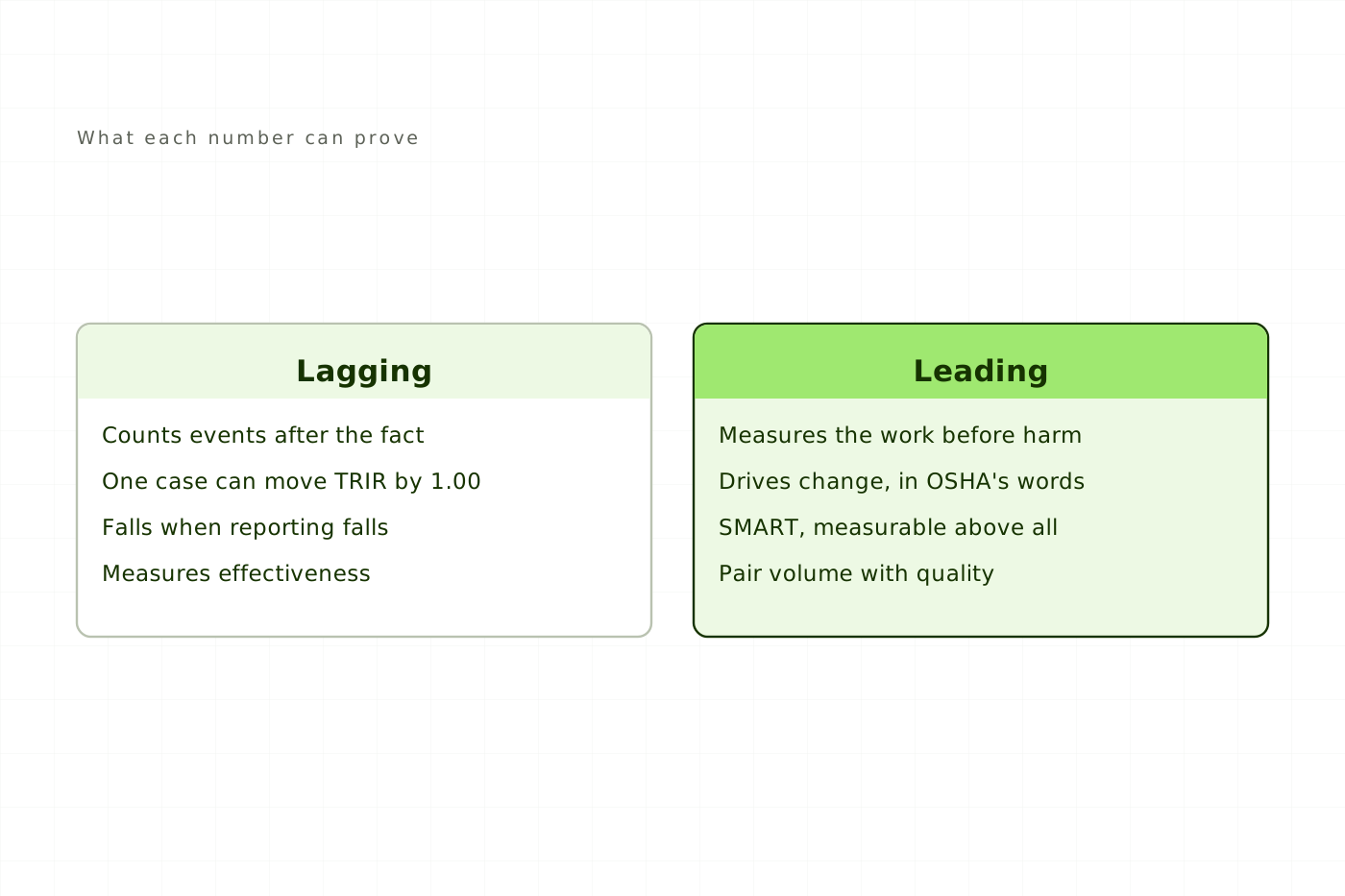
Leading safety indicators earn their place for one reason. A lagging indicator can fall for two causes that look identical on a chart, fewer injuries or fewer reports, and nothing inside the lagging number tells you which one you are looking at. Everything below follows from that.
None of which makes TRIR and DART wrong. They are precise, comparable, and drawn from a log a company executive has to certify. But they count rare events after the fact, and a site can run twelve months without a recordable case and still be one guard interlock away from a fatality. The absence of an event is not the presence of control. One note on scope: the OSHA and BLS material below is US federal. Canadian readers should treat it as good practice rather than a compliance obligation, since provincial OHS acts set the requirements there.
What separates a leading indicator from a lagging one?
OSHA's guidance states it plainly: "lagging indicators measure the occurrence and frequency of events that occurred in the past, such as the number or rate of injuries, illnesses, and fatalities. While lagging indicators can alert you to a failure in an area of your safety and health program or to the existence of a hazard, leading indicators allow you to take preventive action to address that failure or hazard before it turns into an incident. A good program uses leading indicators to drive change and lagging indicators to measure effectiveness."
Free
Read every article, in full.
- Every article on the site, start to finish
- Sources cited and linked on all of them
- New pieces on Intelex configuration and EHS practice
Would rather not sign up? Email me and I will send it over.