Incident management workflow: from report to closure
Pull the open incident list. If the oldest record has sat in Investigation for four months, the problem is almost never that nobody cares. It is that the incident management workflow has a stage with no owner, no due date, and no consequence for missing it. Every stage below needs four things defined: an owner, a due date, an exit condition, and a permission controlling who can advance it. Get those right everywhere and the backlog largely takes care of itself.
What are the stages of an incident workflow?
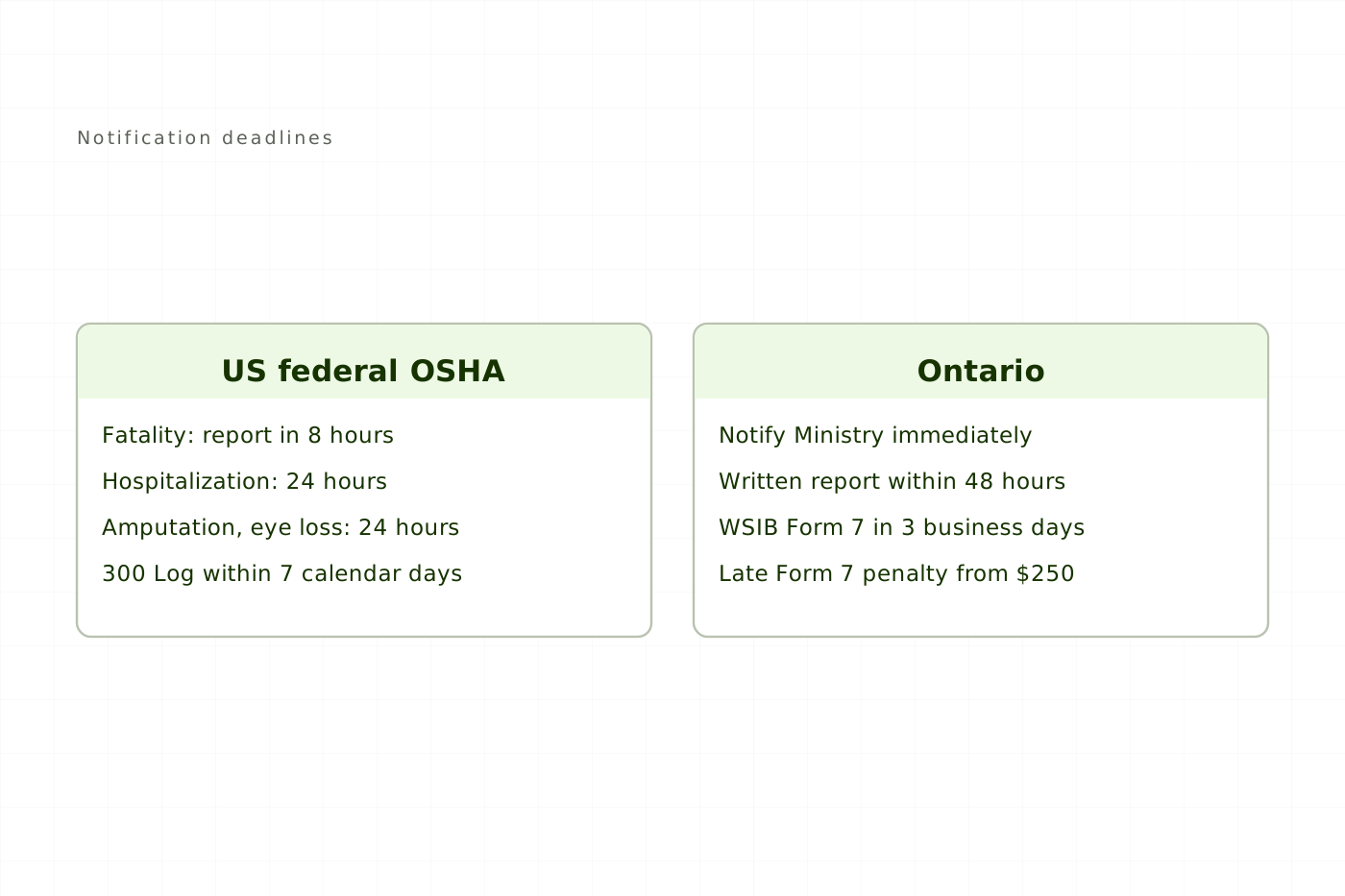
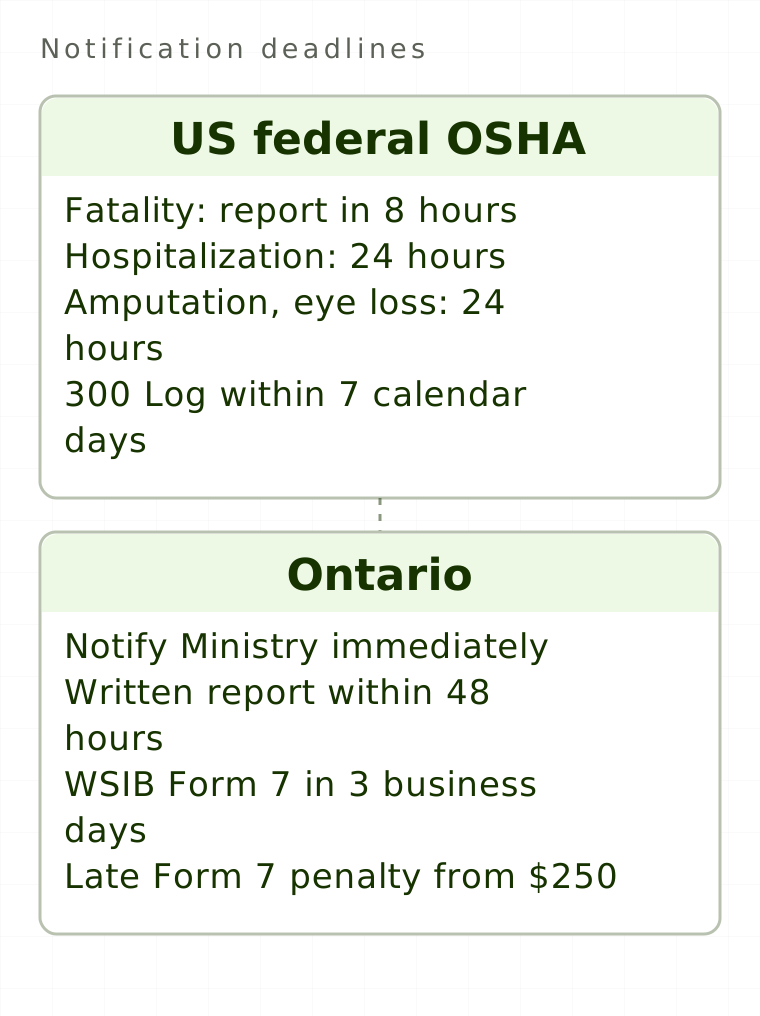
Seven, in this order. Anything fewer and you are collapsing two decisions into one, which is where accountability goes missing. The SLA column is our recommendation, not an industry benchmark and not a measurement. No standards body publishes these numbers. Calibrate them against your own cycle times before writing them into policy. The exception is notification, where the clock belongs to the regulator.
| # | Stage | Owner | SLA (our recommendation) | Exit criteria |
|---|---|---|---|---|
| 1 | Report | Anyone who witnessed it | Same shift; end of next business day at the outside | Minimum required fields complete, record submitted out of Draft |
| 2 | Triage | EHS Coordinator at the reporting location | 1 business day | Type and severity assigned, work-relatedness decided, investigation required yes or no |
| 3 | Notification | EHS Coordinator, escalating to the site leader | Set by regulation, not by you (see below) | Regulator, committee, union and internal list notified; notification logged on the record |
| 4 | Investigation | A named investigator, not the injured worker's supervisor acting alone | 7 days for low and medium severity; 14 to 30 days for a serious event needing a full team | Causal factors documented, root causes stated, existing risk assessments reviewed |
| 5 | Corrective action | One named owner per action | Calculated from severity, not typed | Each action complete with the defined evidence attached |
| 6 | Verification | Someone other than the action owner | 30 days after the last action closes | Effectiveness confirmed and recorded |
| 7 | Closure | EHS Manager or a delegated approver | 5 business days after verification | All child records closed, reporter notified, record locked |
For comparison, the out-of-the-box Intelex Injury/Illness workflow ships with its own timings: Draft submitted by end of the next day, Verification at 7 days, Investigation due by the investigation due date, Returned for Investigation at 2 days, Approval at 6 days. If you run the standard configuration, those numbers already govern your records, whether or not anyone told the EHS team.
Free
Read every article, in full.
- Every article on the site, start to finish
- Sources cited and linked on all of them
- New pieces on Intelex configuration and EHS practice
Would rather not sign up? Email me and I will send it over.