What stalls an Intelex ESG rollout, and how to get past it
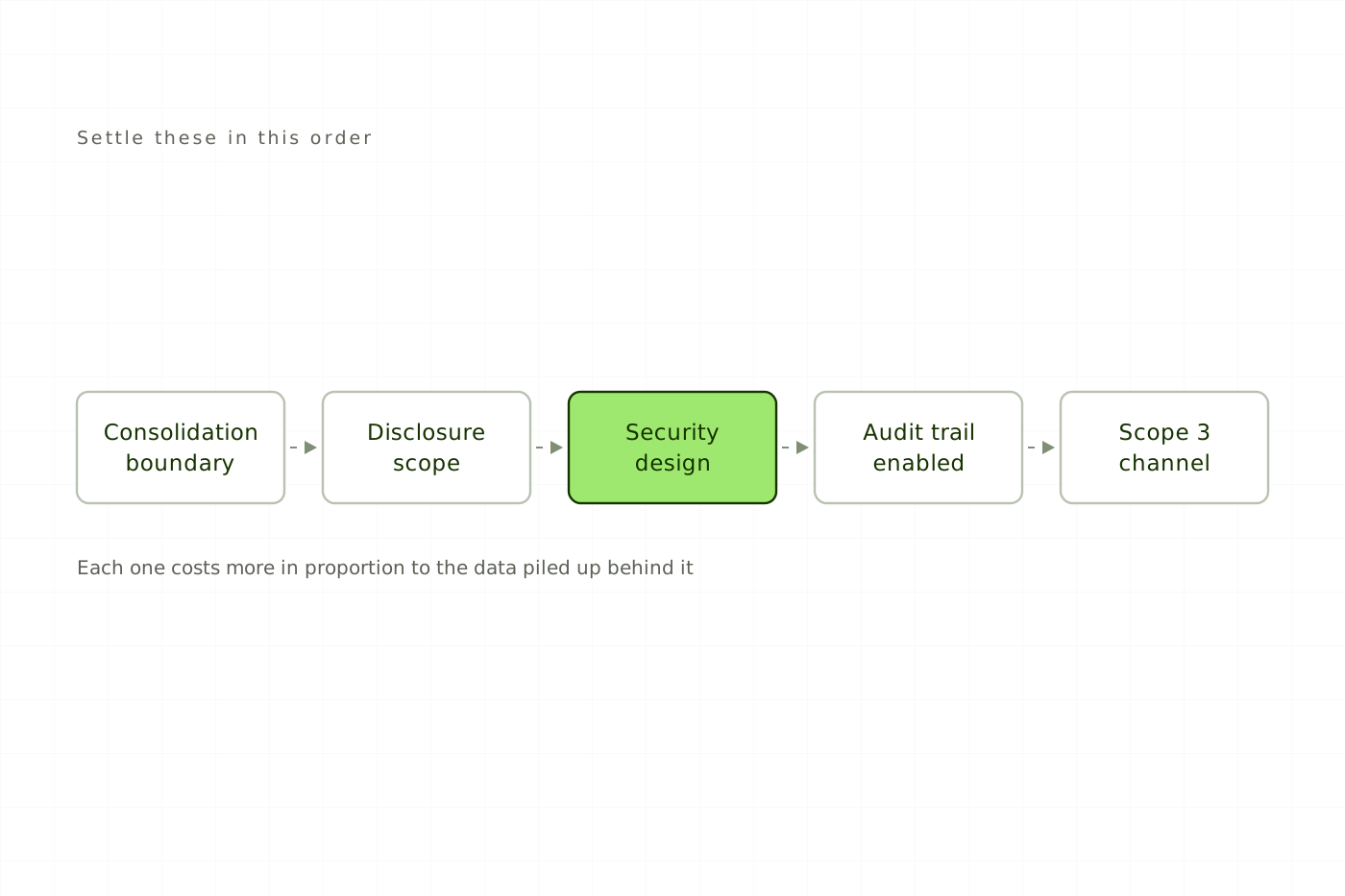
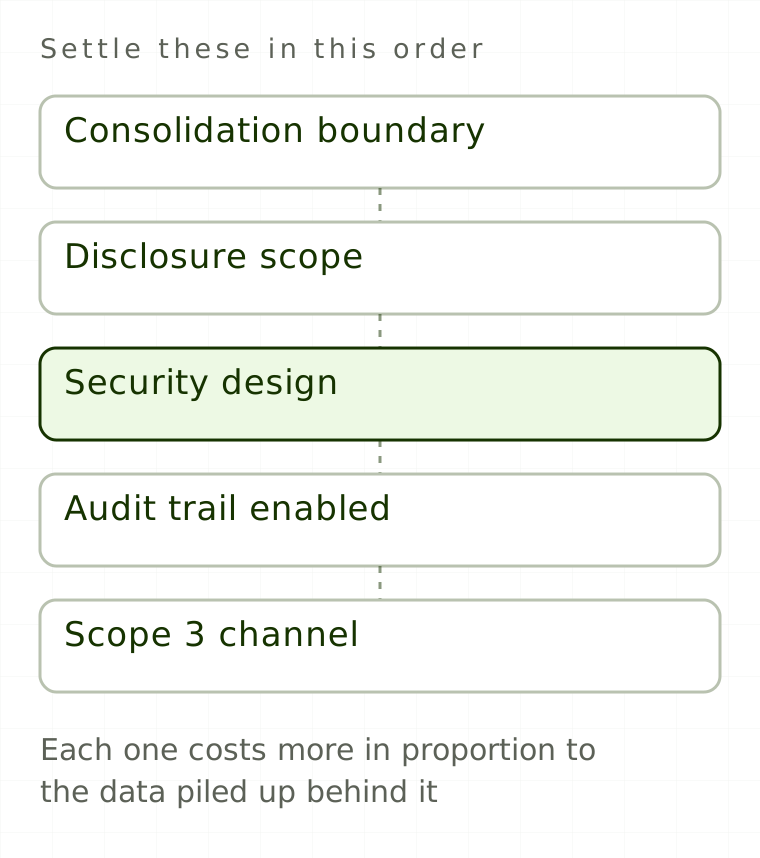
An ESG rollout rarely stalls on the risk written down at kickoff. It stalls on a decision nobody thought belonged to the project, or on a platform behavior that was fine for incident records and is not fine for a figure somebody has to attest to.
The five below share that shape. Each is cheap to settle during design and expensive to discover in month fourteen. None announces itself, and there is no error message for any of them.
Roughly in order of how much rework they cause: security designed after the data is already loaded. An audit trail that was never purchased or never switched on. A consolidation boundary that belongs to finance and has never been written down. An indicator build that starts before the disclosure scope is settled. A Scope 3 supplier integration drawn in the wrong direction. Here is each one on the platform, and what gets you past it.
Free
Read every article, in full.
- Every article on the site, start to finish
- Sources cited and linked on all of them
- New pieces on Intelex configuration and EHS practice
Would rather not sign up? Email me and I will send it over.